

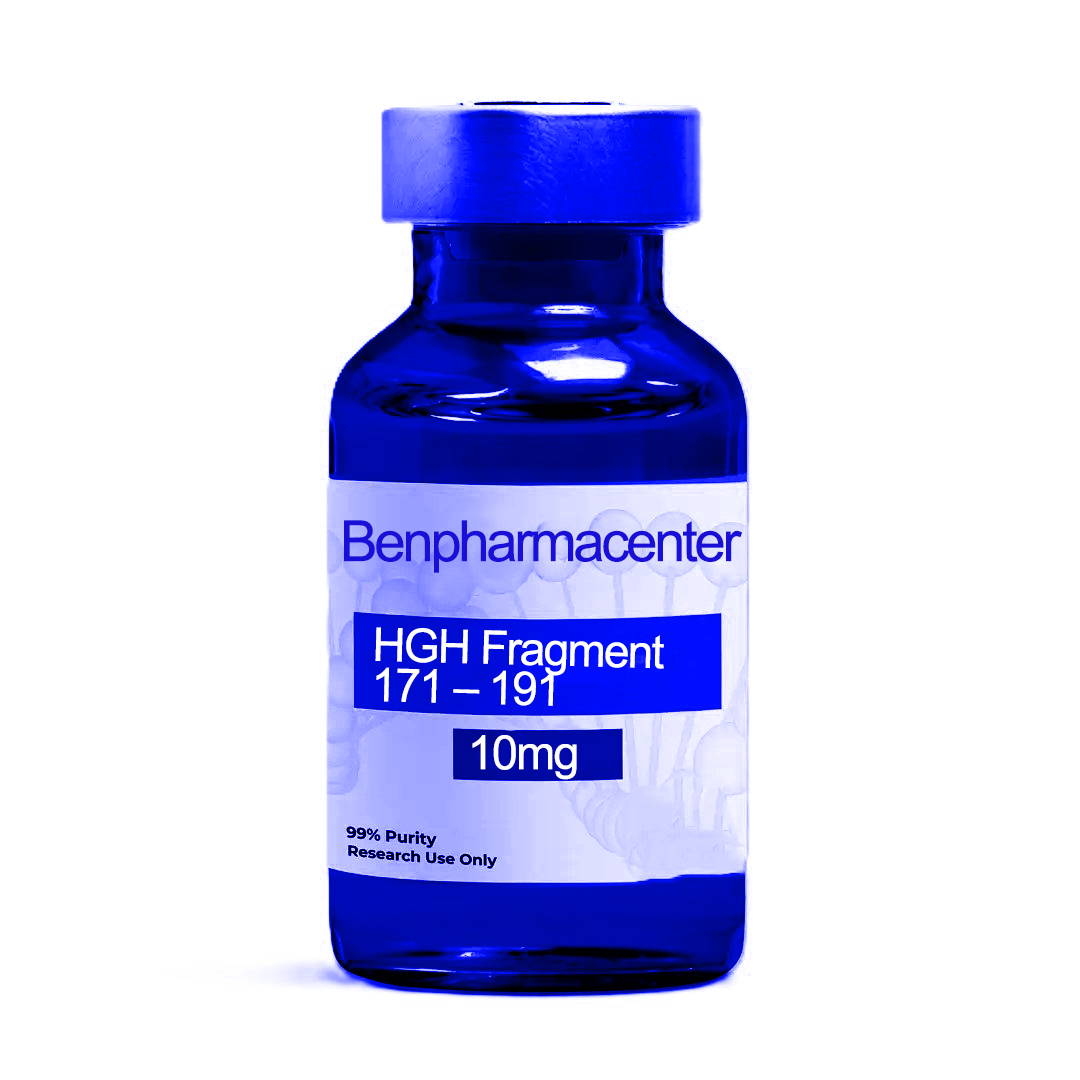
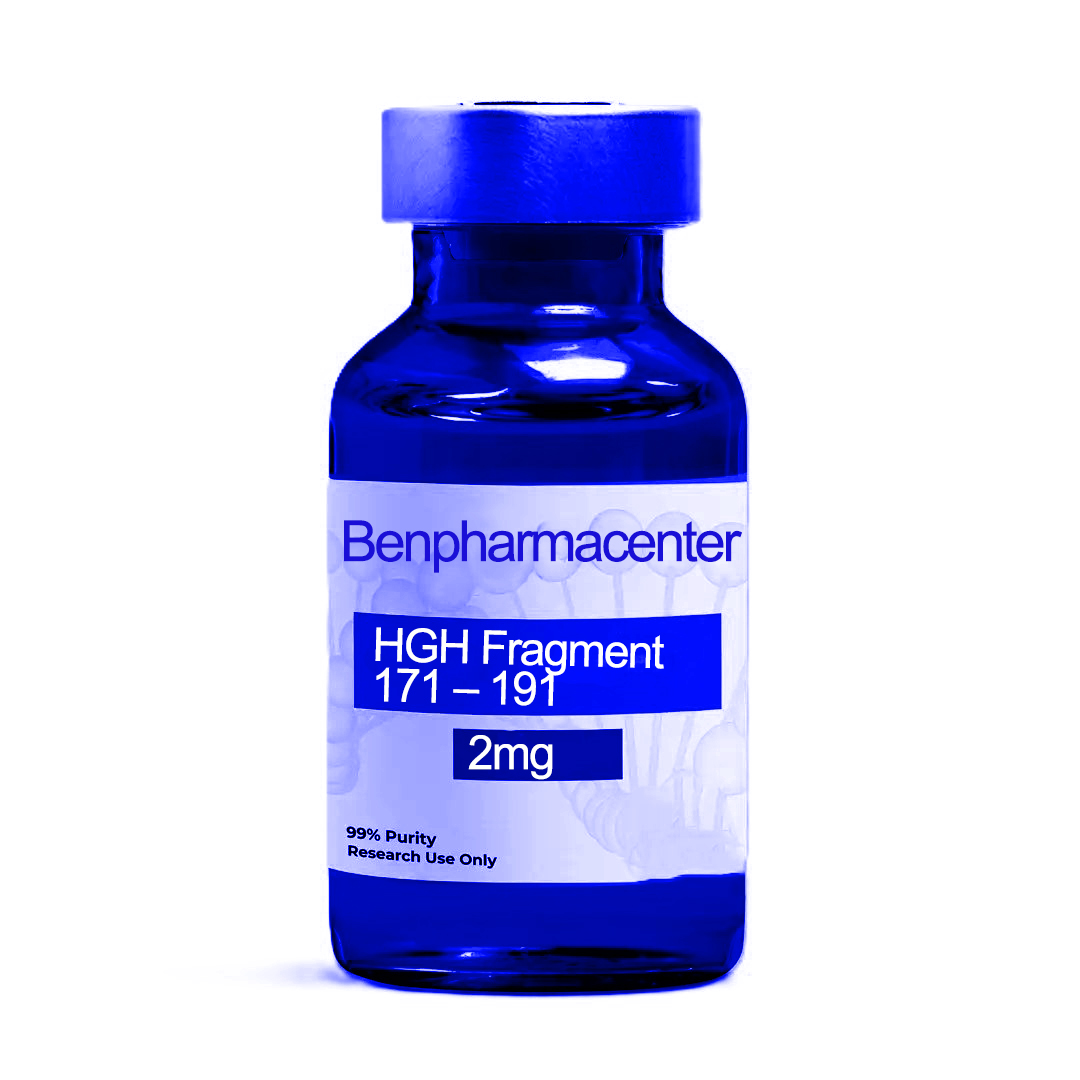
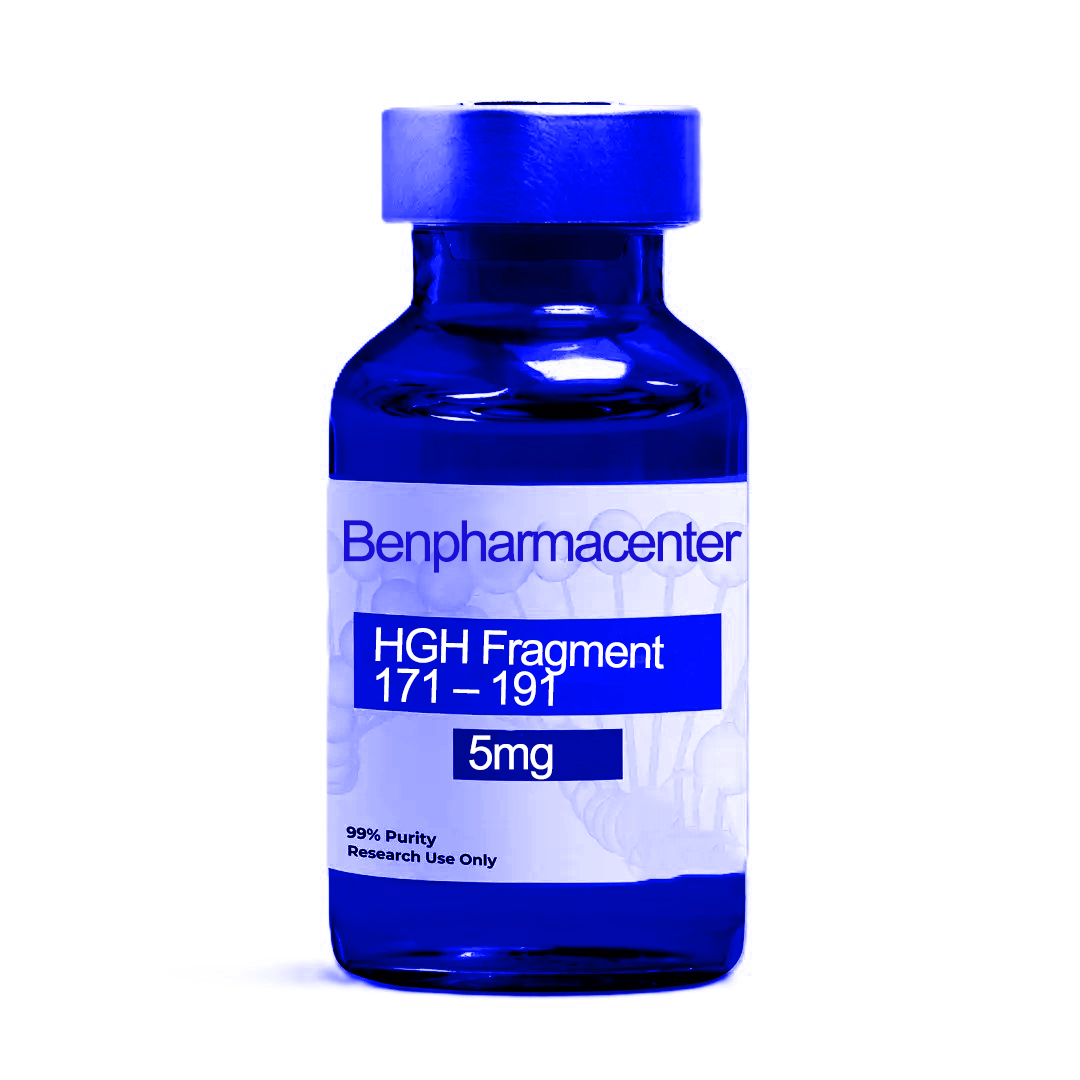
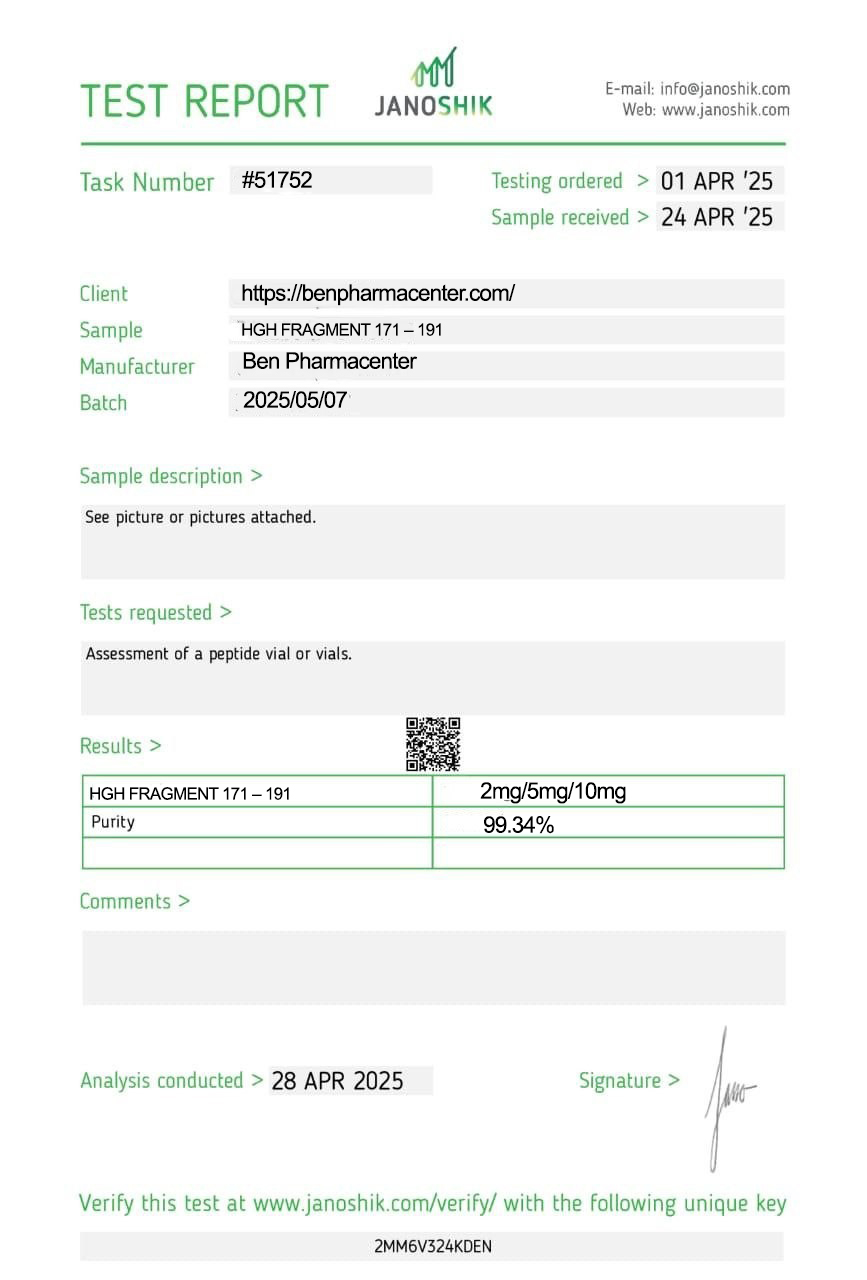


HGH Fragment 176–191 Synthetic Peptide
Fragment 176–191 is a modified peptide derived from human growth hormone (HGH) that contains only a small section of the original molecule—amino acids 176 to 191. Researchers focus on its ability to selectively influence fat metabolism while minimally affecting growth processes.
HGH Fragment 176–191 is a laboratory-created portion of naturally occurring human growth hormone (hGH). Also called the “lipolytic fragment,” it can support fat loss. Studies indicate that it lowers blood sugar levels and aids cartilage repair—without altering IGF-1 levels, modifying insulin response, or stimulating bone growth. Consequently, it provides a targeted approach for fat reduction and recovery support.
What Is HGH Fragment 176–191?
HGH-FRAG is a short fragment of Human Growth Hormone, consisting of the terminal 16 amino acids of the full 191-amino-acid structure of HGH. Its chemical formula is C39H60N8013.
Although it comes from HGH, HGH-FRAG behaves differently. You might expect it to mimic the full hormone because it derives from the same protein, but it does not. Unlike HGH, HGH-FRAG does not bind to Growth Hormone Receptors (GHR), as it lacks the complete 191-amino-acid sequence. Therefore, it does not trigger IGF-1 release or produce the anabolic effects typical of HGH.
How Does HGH-FRAG 176–191 Work?
Animal studies suggest that HGH-FRAG primarily preserves HGH’s fat-burning properties. Therefore, researchers often use it to enhance fat metabolism and maintain lipid processes in the body.
The exact mechanism of HGH-FRAG remains under investigation, but animal studies have highlighted several key influences. Unlike the unbroken Growth Hormone, HGH-FRAG retains only one main function: stimulating fat breakdown, or lipolysis. For example, experiments on obese mice showed that HGH-FRAG 176–191 increased the formation of beta-3 adrenergic receptors in fat cells.
These receptors play a crucial role in mobilizing and utilizing stored fat. Additionally, they support thermogenesis—the production of heat—particularly in skeletal muscle tissue. In one study, obese mice treated with HGH-FRAG for three weeks gained approximately 50% less weight than untreated mice. Interestingly, normal-weight mice did not experience significant weight changes, suggesting the effect targets excess fat.
Another possible mechanism involves blood sugar regulation. Researchers hypothesize that the C-terminal configuration of HGH-FRAG may help lower glucose levels. Initial evidence supports its potential use in managing pre-diabetes and type 2 diabetes (DMT2). Nevertheless, larger trials and meta-analyses are necessary to confirm these effects.
HGH Fragment 176–191 Research
Helps Lower Blood Sugar
Animal studies demonstrate that the tail end of HGH significantly lowers blood sugar. Researchers tested various HGH segments, finding fragment 176–191 most effective. Its benefits likely arise from a consistent insulin increase in the bloodstream. Consequently, researchers are investigating its potential as a therapy for prediabetes or type 2 diabetes patients.
Fat Burning and Weight Loss
Fragment 176–191 earns the nickname “lipolytic fragment” because of its strong fat-burning activity in mouse studies. The peptide significantly enhances fat breakdown and promotes weight loss. This action correlates with increased beta-3 adrenergic receptor (ADRB3) activity, which drives fat metabolism in adipose tissue and heat production in muscles.
Interestingly, mice lacking these receptors do not respond to the fat-loss effects of either fragment 176–191 or normal HGH, highlighting the receptor’s importance. Additional studies show that animals with more body fat experience greater weight reduction. In one study, obese mice displayed nearly a 50% decrease in weight gain over three weeks, whereas lean mice showed no significant changes.
These findings suggest that fragment 176–191 primarily targets fat metabolism in subjects with higher fat stores. Furthermore, researchers suspect additional fat-burning mechanisms may operate independently of ADRB3, offering a promising avenue for future studies on energy balance regulation.
Reviews
There are no reviews yet.